Kathy Zhong:
Welcome everyone, and thank you for joining us today. I am Kathy Zhong, demand marketing manager at Resilio, and I'll be your host for today. Today, we're focused on a challenge that's really unique to emergency services, and that is keeping every vehicle in your fleet fully loaded with current data, current maps, and current software, without pulling a single unit out of service. If you're an IT leader, fleet manager, or technology officer, this session is made for you.
Joining us, we have Eric Klinker, the CEO and co-founder of Resilio, and now the VP of product strategy at Nasuni. Petr Peterka, CTO of RadioMobile, who builds mobile data management solutions that keep fire and EMS fleets updated in the field. And lastly, we have John Redmond, our senior solution engineer, who will be walking us through a Resilio Edge use case later on in the session. Welcome all three of you.
John Redmond:
Thank you.
Eric Klinker:
Thank you.
Petr Peterka:
Thank you.
Kathy Zhong:
Cool. And just to dive in, I'm going to give it to Eric. Can you start us off, just briefly set the stage for us on why DataSync at the Edge is such a difficult challenge, particularly when it comes to moving vehicles?
Eric Klinker:
Yes, of course. Thank you, Kathy. I appreciate that. And public safety is obviously of paramount importance and a pretty important use case to us at Resilio. It goes all the way back to our founding, actually, it may not be well known, but our very first customer that paid us like real money was to solve this particular use case. It was a fire and rescue unit in a particular state in Australia, a very sizable department. And they saw this challenge maybe before even we did and looked to Resilio to help them solve it. So, we're very pleased to have you here today and to talk a little bit more about this particular use case with one of our more contemporary customers, RadioMobile.
So, maybe I'll just hand it over to Petr to maybe give us a little bit of an example or an understanding of what RadioMobile does, and in particular, what their IQ OTA platform is used for and how it is supporting public safety even today. So, Petr, please.
Petr Peterka:
All right. Good morning, everybody. Well, thank you for inviting me to this webinar. I'm certainly excited about using your technology for our needs and most importantly, the needs of our customers. So, RadioMobile has been in business for, gosh, close to 20 years, focusing primarily on first responders and firefighters. And we build these resilient end-to-end communication systems for both vehicles, what's called AVL, the automatic vehicle location, where we connect the 911 center, the ECC, the CAD with every single vehicle so that they can be statused, they can be dispatched. Everybody knows where everybody else is. We send the location.
So, it's about the situational awareness during critical incidents. We also focus on fire station alerting, which is kind of an equivalent thing. You either dispatch a vehicle or you wake up a fire station and then they jump into vehicles. So, we provide this end-to-end support for what I call the incident lifecycle. And one of the issues that we came up with is how do we efficiently and reliably distribute software updates to all of the moving vehicles and fire stations that are far, sometimes they are hundreds of miles away from each other for large counties. So how do we solve that problem?
How do we deliver maps and map layers? Some of these maps are actually persistently stored on the client devices, whether they are MDTs or iPads, so that if people lose connectivity, they still have access to maps and everything else. So, this is the fundamental problem that we were trying to solve and your technology fit the bill to be used as the infrastructure for the service we are offering for our customers, the fire departments.
Eric Klinker:
Yeah, I guess it's no surprise that data and digitization in general would be used in support of public safety that like everything else, data is this critical lifeblood. Obviously, in your case, the data can be lifesaving and it's very important that the most up-to-date information exists as you're walking through a burning building to know the latest blueprint and ensure that you can navigate your way around in a situation where the environment may be quite extreme.
I think it's the nature of that extreme environment that is what Resilio had in mind when we were originally designing just our fundamental or foundational technology. So, I think it'd be great to understand how we're supporting your deployment today, how widespread is that deployment. And as you were looking at solutions, maybe give us an understanding of what the world looked like before you found Resilio and the challenges you were facing. And I think that will telegraph some of our punches here as we look to solve those problems later in the discussion.
Petr Peterka:
Yeah. Different fire departments have different level of sophistication when it comes to IT support. Some have great IT departments and they have remote access to the MDTs and they are able to manage and maintain some of these end devices reasonably well, but that's really not the focus of most fire departments. And so, they were looking to us to help them with solving that problem. And it's somewhat unique, most IT departments, yes, are delivering updates to desktop computers. They are all on ethernet, they are all on permanent networks, they are pretty well-connected and reliable.
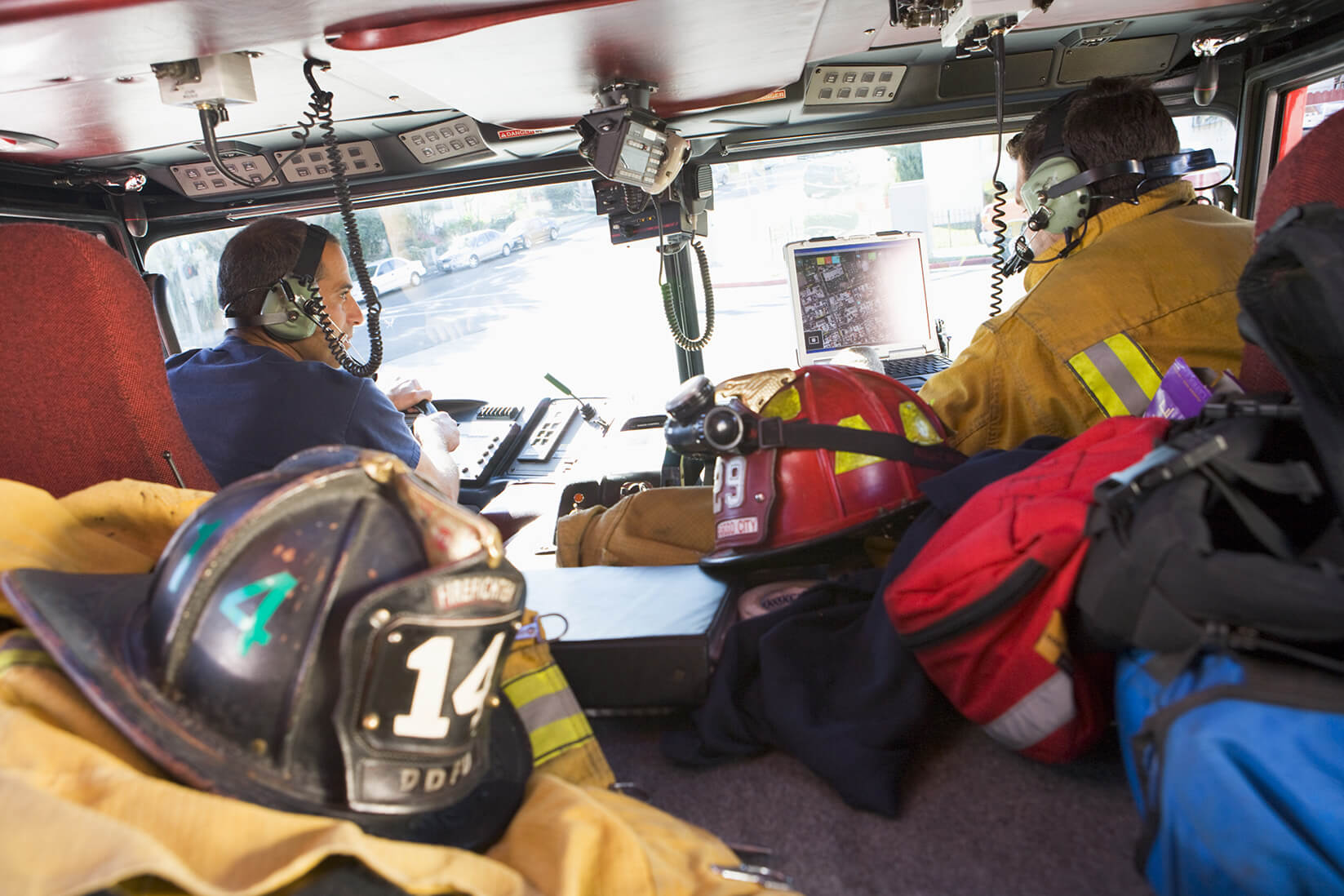
When it comes to vehicles, fire engines driving around, first, they are driving around. They are not connected through a wired connection. They are always wireless of sorts, LTE, 4G, 5G, satellite, whatever they have available at that point. But what happens is they may be driving in and out of coverage. Their available bandwidth is very different. I may be on 5G and I may have hundreds of megabytes, if not gigabytes available. And then I drive through a canyon in the Sierras and I get close to zero or I drop too close to zero and then I switch to maybe satellite. So, the network is very, it varies a lot and it could be interrupted.
And so, a lot of traditional download systems, they start to download and the network gets disrupted so they cancel it. And when the network comes back, you start over again and you may be trying potentially hundreds of times. If it is a software update, it's not necessarily a large file. If it is a pre-plan or some small map layer, okay, it may take a few minutes and it's not a big deal, but sometimes we are downloading complete maps that could be hundreds of megabytes, if not bigger, and it may take hours to download such a file. So, that's where the traditional IT tools usually come short.
Eric Klinker:
Yeah. I think that makes a lot of sense actually when you think about the challenge. It's not a challenge everybody faces, but in particular for public safety, it's a predominant requirement. So, as you were designing IQ OTA, it sounds like that was a non-negotiable item in your solution. Can you walk us what the world looked like before that, before you had that non-negotiable aspect met and how Resilio, in particular, Resilio helps with that varying network connectivity and what life looks like after you found us?
Petr Peterka:
Yeah, the world was much more static. So, for instance, when we installed MDTs, they were preloaded with the large map files and they just didn't get updated very often just because of this limitation. Software, we were limited how often we could release software just because of the difficulty of updating. Somebody potentially had a USB stick and they had to drive around. So, you didn't want to do frequent releases as people are used to now where you could have, if not daily, but you could have a release every other week of software so that you can-
Eric Klinker:
Yeah, that's a great question. So, what were the risks in doing that? So, I'm operating with less than current software. What does that mean?
Petr Peterka:
Well, you are not taking advantage of the latest features that we continuously keep improving the end-to-end, the overall solution based on our customer's requirements and suggestions. And so, we want to be nimble and fast responding, but if the frequency was every six months or 12 months that you could deliver new software that limited that responsiveness, but it's also you have ongoing information development of sorts. You have new and new pre-plans for more buildings, or you have updated map layers like fire hydrants, right. You are building new neighborhoods and there are new fire hydrants. So, you need to be updating these files often. And so, this just gives us the opportunity to keep everybody as current as possible.
Eric Klinker:
Great. Yeah, I think that's great. And for the folks that are maybe in this space, in this industry launching the audience, what would you say is sort of the most important criteria when you're evaluating solutions in this space? What would you have them look for based on your considerable experience delivering these kinds of solutions?
Petr Peterka:
Yeah, there were several requirements that we had before we chose Resilio. One was the resiliency or the reliability of the distribution process across networks that are just by nature unstable. They vary in bandwidth, they can be interrupted, and I didn't want that to be a roadblock. So, the mechanism, where you, my understanding is that you chop the big file into small chunks and they get downloaded piecemeal and then through complex hash functions and then other things, you verify the correctness of all the pieces and then you paste them back together. And then you give me a signal, "Hey, this code is now completely downloaded to the MDT." And then my application can invoke a notification to the end user and say, "Hey, look, when you are not in a critical situation, when you are back in the fire station, just push this button and your software will get updated." So, the resiliency of the system over networks that are very unstable, that was one thing.
The other thing was to be able to download large files, I mean really large files, these maps of entire states, those are hundreds of megabytes and sometimes even bigger than that. How do I deliver that file without restarting 10 times, right? Because you don't want to be hogging the network either because you need to send dispatches and some more important information than large data files. The other thing I was looking for is if I need to address, we have some customers that have thousands of vehicles, and if I need to send a large file to a thousand of them, I would need a huge data center with a huge pilot to be able to serve that audience and the system would become very expensive. The way my understanding of how Resilio works, it actually uses the peer-to-peer networking mechanisms where I may deliver the file to one fire engine at a fire station. And if there are three other engines around, they can actually now deliver it to each other and therefore they are sharing local networks as opposed to requiring an expensive data center. So, that was very important.
And the last thing was, I'm not only delivering files to the vehicles, I want to be able to upload files from the vehicles, whether it's log files so that I can analyze potential issues or I can predict a potential failure if I proactively look at these log files and look for error messages or something like that. Or I can be bringing statistics of how quickly did I get to an incident and on average, am I improving in the response time? I can do a lot, or not I, the fire departments can do a lot with data that they can potentially collect. So, I wanted a two-way communication. So, these were the criteria I had.
Eric Klinker:
Great. So, just to replay that, a fault tolerance resilience, the ability to be efficient, incredibly efficient with limited resources, and to offer departments the flexibility to future-proof their operations. Whatever their data needs are in the future, they've made an investment and a platform that is able to meet those demands and chart the future of public safety.
So, these are three strengths that we're very proud to deliver, and I'm glad you found us, Petr. Obviously seeing is believing, so we would love to maybe take the time at this point to get a look at IQ OTA and see how this platform works and the value that we're delivering to and you're delivering to public safety officials even today. So, please would love if you would share a little more details with us.
Petr Peterka:
Yeah. So, we talked about most of these things, what was the reality before Resilio, right? And it gave us a limited way of keeping vehicles, especially that are on the road and moving up to date with the latest information and software and data files. We talked about why it matters, right? For situational awareness and the most effective response that we as citizens expect from the fire departments and first responders, they have to have all of the tools and data available at their fingertips, so to speak. So, that was really the problem and the goal of solving this for not only one customer.
I didn't say this before, but everybody can really go and buy Resilio and figure out how to use the system. What we thought where we could also bring value is if we set it up once, but we can set it up for many fire departments and we can run it as a service so they don't have to really worry about anything. They just tell us, "I need to deliver this at this time to this fleet, or this is a subset of vehicles, I need to deliver it." And we separate different customers into their own buckets. We keep the data private from each other, and then we set up the jobs to deliver whatever needs to be delivered to a group of, you call them agents, but these are really the MDTs or MDCs or the fire stations.
So, that was the reality, that's where we were until we came across Resilio. Here is a very simple diagram that shows on the top, you have the data center where all of the files reside, that's the origin, that's where the content is pushed from. Then you have the big cloud of multiple different wireless networks. As I mentioned, LTE, 4G, 5G, satellite, these vehicles can be switching from one to another. And so, the content is delivered through that network to individual, either fire stations or individual vehicles. And then lastly, as we talked about, because it's a peer-to-peer network, they can now start sharing the data among themselves, speeding up the whole process of updating potentially hundreds of either stations or vehicles. So, that's the simple diagram. It's way more complex behind the scene, of course.
So, as I said, public safety needs reliability, and so that was the goal for building the system for them. So, we primarily deliver executables, applications, and supporting data like pre-plans and configuration files and GIS maps and map layers. Many of our customers have very active and creative GIS teams, and so they keep improving the maps and map layers all the time. So, they needed a mechanism to actually make their work available to as many end users as possible.
If you want, I can walk you through an example of what we do when we run a job. Resilio calls them jobs so I adopted that term. So, what we do is we, let's say, say we need to deliver this executable and maybe it's for testing only. So, we create a small group of vehicles that are designated as testers. We push that software, we either schedule it. Sometimes fire departments say, "I really don't want to do this over the weekend," or, "I don't want to do it at a busy time of the day." So, they give us the optimal time when to push that software, then we push it to the test group, they do their testing and two, three days later they say, "All good, let's push it to the entire fleet." So, we have the vehicles grouped into different groups so that we can reliably push that through.
So, here's an overview how a job may look like for the person who is running it. These are small characters, people probably don't see that, but it shows here in this case, hundreds of vehicles, some are online, some are offline, and it is just fine. Some vehicles can be parked in a fire station and turned off, right? In that case, they are not on or they could be powered up or they could be out of service for weeks potentially. So, that doesn't matter, we are able to deliver over time the information to all of them.
We also look at how does the network look like? How much data am I downloading at any given point in time? And I'm looking at how many files did I deliver and I can see the progress of ... Let me go back. There's also a way to look at network interruptions, and so I can see how good or bad the network is, but at the end, it doesn't matter. The resiliency of the system allows us to deliver the content, whatever that is, eventually, to every single vehicle. So here, we set up the different jobs, we schedule them, and when the time comes, it starts pushing the content, the data to the right group of vehicles.
So, this is a dashboard of a running job, so we can see how many agents we have active. The agents in this case are the vehicles or the fire stations. I can see how many they are offline and as I said, that's just fine. And then I see how much data I have actually used in the progression of that job. So, this is just few minutes after the job starts. I can see the network usage and I can start seeing how many megabytes or gigabytes I've delivered. And it also gives me information of how many actual files I deliver. At the end, I don't really care how many gigabytes I really care did I deliver the file or a collection of files to every vehicle. Yeah, this is where it shows the number of files delivered on the upper graph and on the lower graph, it actually shows the network instability that we talked about, the interruptions or when the vehicle gets turned off. So, you can see it can get really bad.
And then we can either let the job just run on its own and it will report to us how many vehicles get updated. If I want to see more details or if somebody, a customer calls and says, "Hey, this is an important fire chief and he hasn't received the update, can you look at that? " So, here I can actually see all the individual vehicles and I can see the progress. Have they downloaded 100% of the file or are they somewhere halfway? And I can tell them, "Yes, this was delivered," or, "This looks like it's going to take another 20 minutes, be patient."
If there's a specific issue with a particular vehicle, I can really dig deep. I can look at the Resilio log files that tell me when the job started, were all the conditions met or is there an issue? The most obvious one for me is that the vehicle is offline. Okay, in that case, the job for that vehicle pauses and as soon as they come online, it will continue. And here, down here, you can't read the fine print probably, but it actually tells me that it delivered this file. In this case, it's an executable, and I know at that point the user will be notified so that he or she can select the right time to invoke the update. If they are at an incident right now, they will ignore it, but if they are at a fire station and they have a little bit of time, they just push that button and it restarts the application and boom, they have a new version of it.
So, this is really how the system works. From a customer point of view, they really don't see any of this, right? They say, "Deliver this new map to this fleet at 6:00 on Tuesday," and magic happens, and most of the vehicles actually get updated within minutes. And then you have some of the vehicles that come online later, so I can either run the job for days or even weeks, and as vehicles come online, they pick up the new data that was delivered to everybody else before.
So, as I said, the goal is to keep everybody up to date with all of the tools and software and maps as they do their jobs of keeping us safe.
Kathy Zhong:
Yeah. Thank you so much for that great breakdown of RadioMobile software distribution. Next up, I'm going to pass it to John to give a little look at our Resilio Edge use case and a live demo as well.
John Redmond:
Thanks, Kathy. Appreciate that. All right, I just want to go over a little bit about the platform of the product. As Petr mentions, it's really based on the management console and agents. This management console is your central point of really your single pane of glass, you can say, where you can actually look at the overview of Resilio infrastructure, how the agents are doing. You create jobs there, you troubleshoot, you see network statistics, you see disk speed and IO and what's happening with your jobs. It's very, very granular. Unlike other products that offer free or really low insight into what's happening, we provide really great intuitives of what's happening with the actual job.
And everything you do within the Resilio Management Console, you can automate it through a REST API. So, we have that built in. The management console can be used as an agent, has an agent built in, or you can unlicense it and just use it as the management piece. Within Resilio, we offer flexible and automated workflows. As we're mentioning here with this webinar, we're talking about Edge workflows straight out to these MDCs or MDTs to fire and rescue. So, we also offer server sync as well as cloud sync, hybrid sync, which actually works in conjunction with caching. So, we have a tremendous amount of automated workflows that can really benefit and show how we help institutions, companies really move their data anywhere.
When you talk about moving data, you have the file data and replication and access. We have our Resilio server agents, different agents that accomplish different things. We have our file, our management agents you can actually point to the cloud if you like. And again, we have our Edge user agents, which are used on the Edge. It could be laptops, it can be computers, we also have offer Android devices. We have companies that have these Android devices in restaurants or out in the field and they collect data and push it back to their central server.
And I can't stress it enough, what's unique about Resilio is our peer-to-peer architecture. Where, as Petr mentioned, it's taking these small chunks of data and really distributing among the agents that are in the job. Instead of going all the way back like a hub and spoke, back to the server where you're taxing network resources and storage resources, there's latency involved, we really speed that up quite a bit and we make it efficient. So, anywhere you can use Resilio, it could be on the Edge, data center, really in the cloud migrations, we're really built it to be active everywhere.
So, just a note on our Edge Ingest and Distribution, we like to say again that all data's encrypted, AES-256 on the WAN. We offer, again, the highest speed that you can provide on your network we'll use. We also can limit that network bandwidth if you like. If you would like us to throttle it down, we have the ability to do that within a specific job globally or on a job-by-job basis. And what's nice too is that we break up the files into chunks and we are able to sync those smaller chunks. After they're verified and hashed, we sync those and allow us the agents to really, again, share that data through peer-to-peer technology.
And what's really nice that I appreciated when I was an administrator for emergency management in my county, that ability to have an agent when it goes offline to come back and just pick up where it left off is beautiful. I remember restarting jobs many times, our network was high latency, it was terrible. I wish I had Resilio back then, but it was a real challenge to get the data out to those MDCs and those fire trucks and those ambulances. I had to use a USB drive, it was really messy to make sure they didn't fail. So, we really perform well over high latency networks. Petr mentions it could be LTE, it can be a satellite connection, a VPN. We're making sure that the data gets there, even if the agents go offline and come back.
So now, let me go ahead and just demo the product to you and show you what an Edge use case would look like within Resilio. Let me share my screen.
All right, here we have the Resilio Management Console. Petr, showed you some screenshots and I'll show you what it looks like live. Here we have the management console where you can get an overview of what's happening with all your jobs that you have within Resilio. Again, we talk about that single plane of glass, this is where you would really manage and look at as an admin, your jobs and seeing how much data you're transferred. You can see the transfer speed, bytes transferred, number of files, number of disconnects, if there are network disconnects, you can see when they're happening. You can also get alerts via a web hook or email address saying, "Hey, this agent went offline," or, "This agent's back online." So, it keeps you abreast of what's happening.
We're talking about jobs now and the distribution job that Petr's been mentioning is really a nice way to upgrade or send packets of information, mapping files. It could be Windows updates to a series of agents. Let me show you the job and what it looks like. Well, I'm using a distribution job and what makes a distribution job unique compared to a synchronization is that it can be scheduled and you can also trigger the data either before it gets there or after with a script. Let me show you what it looks like.
Here's my job that I've created. I have the details of job, what I named it. I have my source agent, which this is where the data resides that's going to be pushed out to my agents. Here's my destination, which is my laptop one and where I like that data to be delivered to. And here's the unique part. Here's the trigger. I set it for after the agent completes downloading the data to run this script so that it automatically will take that data. And in this particular case, I wanted to upgrade the version of Resilio that this agent has. So, if you notice this agent, laptop one, has an older version. I'm on 4.27, I want to upgrade it to 4.24. So, with that job, I go ahead and go to jobs, click on the job. I'm going to start it. I'm going to go to my job runs and let's take a look at the insight, what's happening with this job.
I like to go to the agents tab and you can see I have four files that are waiting to be downloaded. As they continue to be downloaded, they'll reach a point where now it's executing the script and telling really the data what to do now. Give it direction and execute it. When it's successfully finished, I'm going to go back to my agents tab. And if you notice, laptop one now is upgraded to 4.27. And this is just a perfect example on how you can use Resilio to actually distribute software and it's powerful because you can use scripts to tell it what to do.
Another use case that I wanted to mention, which is really beneficial to Edge use cases is the ability to take data, large amounts of data and allow an end user data. Whether it's end user, which is a laptop or a desktop to find and execute whatever they want. Let me demonstrate that to you.
We have a job here, it's called a TSS job, and this is a transparent selective sync job. This allows the end user to choose whatever data they like to download. They may not have a lot of room on their desktop or laptop, or perhaps they're in a position where they want to download something a little later. So, in this job I've created, it'll allow the data to be presented in a dehydrated cloud. Let me show you what the end user will see in the actual job. Let me just minimize this and go to my laptop.
So, this is the TSS job that was configured for this particular agent. If I click on it, it takes me to Windows Explorer. And let me just make this a little bit bigger for everyone to see. So, here is my data. As you can see, these files are presented in a dehydrated cloud. So, they're not actually on my desktop yet, they're actually one kilobyte files that I can go ahead now and right click and actually keep on my device if I wanted to work on that. You'll see that it's transferring now just that file to my desktop. Once it's there, I can click on it, open up that file, the file open, work on it, make any changes, close it out, and just now resync just that file by freeing up the space back to my server. Whether it's a NAS server or Windows server, whatever the case may be, a Linux server, whatever the case, and able to now just save that space so you're controlling the amount of data that's existing on an end user's device.
To extend that even further, we offer a caching gateway, which allows end users to experience a more granular way that they can manage their data in a similar fashion, but with file policies. So, we can hydrate these files and pin them so they're ready for the end users to actually use them. So, these are just a few use cases. I know it's a short demo, but it gives you the ability to really take your data and push it onto the edge wherever that may be. Back to you, Kathy.
Kathy Zhong:
Thank you so much for that demo. I'm going to just bring us all on stage for some Q&A. Cool. And if you guys have any questions, feel free to add them right now. So, to kick us off, I have this question. What happens if a vehicle goes offline in the middle of a sync?
Petr Peterka:
Do you want me to answer that?
Kathy Zhong:
Yeah, Go ahead.
Petr Peterka:
I see this all the time. And let's say it downloaded half of the file, it's already on the hard drive of the MDT, then you go offline. The Resilio job for that specific vehicle pauses, right? It doesn't delete the partial downloaded file. It pauses and as soon as the vehicle comes online, a minute later or two hours later or two days later, it doesn't matter. If it knows where it left off and it starts bringing the remaining chunks that John was talking about. And if it gets interrupted again, okay, now I'm at 70%, but as soon as all of the files or the chunks get downloaded, then the actual update can be triggered. So, not a problem at all. And that's what this system is designed for.
Kathy Zhong:
Another question that I'm seeing, can the system also collect data from the field and bring it back from the vehicles themselves?
John Redmond:
Yeah, that's where we're talking about a consolidation job where you can actually ... Distribution is distributing it to many vehicles where consolidation, now, you can take that data and pull it back whether you want to run analysis on it or some kind of AI tools to see what's happening with your data, your engines or whatever the vehicles are. So, yeah, it's definitely possible.
Petr Peterka:
And I use it all the time when a customer calls and says, "Hey, this vehicle says that it's some error message or something is not working." My first reaction is, "Okay, let's upload the log file from the software that I'm running and let's see if there are any obvious error messages that will tell me what's wrong with that vehicle." So, I can pull up a large log file for the last couple of weeks within seconds, literally.
Kathy Zhong:
Yeah. That's good to hear. Yeah, and just a question for all of the speakers today. If there's one thing that the listeners should take away from this webinar, what should be the one thing? I know that's hard, it's a lot. We went through a lot today.
Eric Klinker:
Yeah. I'll just chime in and remind the audience that the environment that we're operating in here with public safety is among the most difficult on the planet. And because of that extreme environment, you want a solution that is undaunted by difficulties and that is the Resilio protocol. It's what we were designed to do from the very foundations of the technology. So, that environment was what we had in mind when we built the solution. Public safety is one such example, there are many others where that's a critical requirement, but perhaps the most important is the one that we're discussing today. So, that'd be a takeaway I would love the audience to have.
Kathy Zhong:
Okay. I see another question. Let me pull this up. Hello, new Resilio adopter here. I haven't really thought much about the vantage and value of transporting Selective Sync. We'll look more into it. Thanks. It's more of a comment. So, I guess they're learning little about today. Thank you for your comment, John. Perfect.
So let me, as we wrap up some important resources and next steps. So, if you guys want us to schedule a demo directly with our Resilio team, feel free to scan this QR code, visit our website. If you're a customer, welcome. Join our customer community if you haven't already. We have a customer community where you can share best practices, ask questions, talk to other customers, and even share your product insights, any tips and tricks for other customers. So, always a great space to share more of your thoughts.
And of course, last but not least, learn more about our customer/partner, RadioMobile, they have a great product, a lot to see there. So, thank you guys so much for joining us today for our live session. And we look forward to chatting with you guys another time, but thank you everyone for attending.
Eric Klinker:
Thank you, Kathy.
Kathy Zhong:
Thank you, guys.
John Redmond:
It was a pleasure.