Resilio is Joining Nasuni — Learn More →

Modern Disaster Recovery Without Bottlenecks or Downtime

Near real-time, file-based replication that keeps your DR copy continuously current—for a tighter RPO than snapshot- or block-based tools—across on-premises, cloud, and remote sites, on the storage you already run.
Modern Disaster Recovery Without Bottlenecks or Downtime

Rethink the Replication Layer Behind Your DR Plan

Most DR gaps aren't in the runbook—they're in how the data gets there.
Legacy DR tools replicate on a schedule: snapshots, batch windows, nightly backups. Every interval is a window where recent changes haven't reached your recovery site yet—and that window is your real RPO, no matter what the plan document says.
Resilio Active Everywhere replaces scheduled replication with continuous, file-based replication that moves changes to your DR site as they happen. The result is a recovery copy that stays current, a tighter RPO than snapshot- or block-based approaches, and your disaster recovery strategy shifts from cold archive to live, ready-to-failover infrastructure.
Beyond backup and cold recovery, Active Everywhere delivers continuous data protection, keeping mission-critical files protected and immediately recoverable through natural disasters, hardware failures, power outages, cybersecurity threats like ransomware, and human error.

A Tighter RPO Than Block- or Snapshot-Based Replication

Close the gap between when data changes and when it's protected.
Your RPO is only as good as how often your replication tool actually moves data. Fast, reliable data recovery starts with how current that copy is when you need it. Snapshot- and block-based tools, as well as traditional data backup, work in intervals, so your most recent changes remain unprotected until the next cycle. Active Everywhere replicates continuously at the file level, capturing and transmitting changes as they occur—so the data at your recovery site reflects production in near real time.
Recovery point objective (RPO) measured in seconds, bounded by your change rate and bandwidth—not by a backup schedule
Recovery time objective (RTO) measured in minutes, because failover skips data restore, rehydration, and rebuilds
A DR copy that's always warm, so failover becomes "bring the apps up," not "get the data there"
A Tighter RPO Than Block- or Snapshot-Based Replication

One Platform Across On-Premises, Cloud, and Edge

Standardize DR on the storage and infrastructure you already run.
Most DR tools are tied to a specific storage vendor or cloud, forcing you to migrate data, match hardware at your data center or recovery site, or accept vendor lock-in. Active Everywhere is storage- and infrastructure-agnostic. It replicates between unlike systems—NetApp to non-NetApp, one Azure region to a non-paired region, on-premises to any cloud—across file, block, and object data storage, on Windows, Linux, and Unix.
On-premises data centers
Public cloud (AWS, Azure, Google Cloud, OCI, and others)
Hybrid and multi-cloud architectures
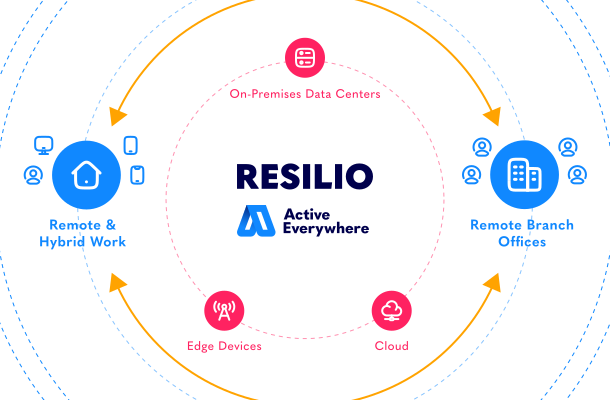
Edge and remote sites
Standardize a single DR approach across all environments to build redundancy without rearchitecting workflows, matching storage at both ends, or paying capacity-based fees. Our disaster recovery deployment uses the same real-time replication engine that global IT teams already run for server-to-server sync.

Distributed. High-Speed. Automated.

Resilio Active Everywhere empowers organizations to efficiently, securely, and economically orchestrate how data moves and where it lives across global infrastructure—delivering the performance of a distributed architecture with centralized control.

The high-performance data movement platform is easily managed and deployed by orgs of any scale—from collaborative creative groups to the world’s most demanding DevOps and Engineering teams.
The New Standard for High-Performance Data Everywhere

Run Every DR Job From a Single Console

Centralized control and visibility across every DR job and site.
As DR spreads across sites and clouds, teams end up managing dozens of separate sync jobs, stitching status together from multiple tools, and finding out a job failed only after they needed the data. Active Everywhere runs continuous replication from a single management console, so you can see and control every job and agent in one place.
Continuous file and block-level replication across all endpoints
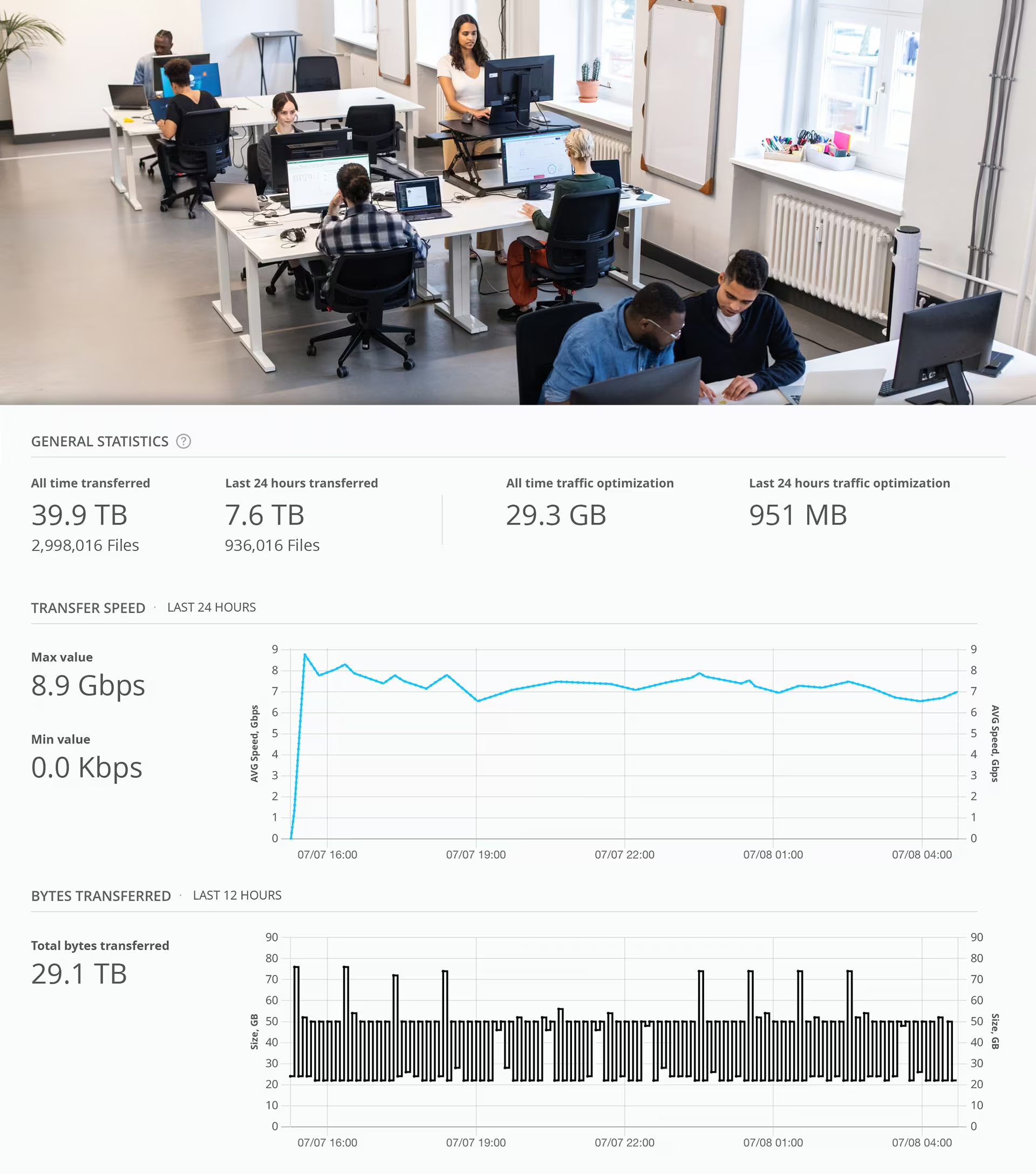
Single console for job status, transfer progress, remaining data, and health
Simple agent deployment and management across environments
Granular job creation, with per-job and per-endpoint bandwidth tuning
Monitoring and alerting on replication status, so failures surface immediately
Automated recovery procedures via API, scripting, email notifications, and webhooks
Less manual effort, fewer surprises during failover, and confidence that your DR copy is current and monitored.

High-Speed Replication Across Any Network
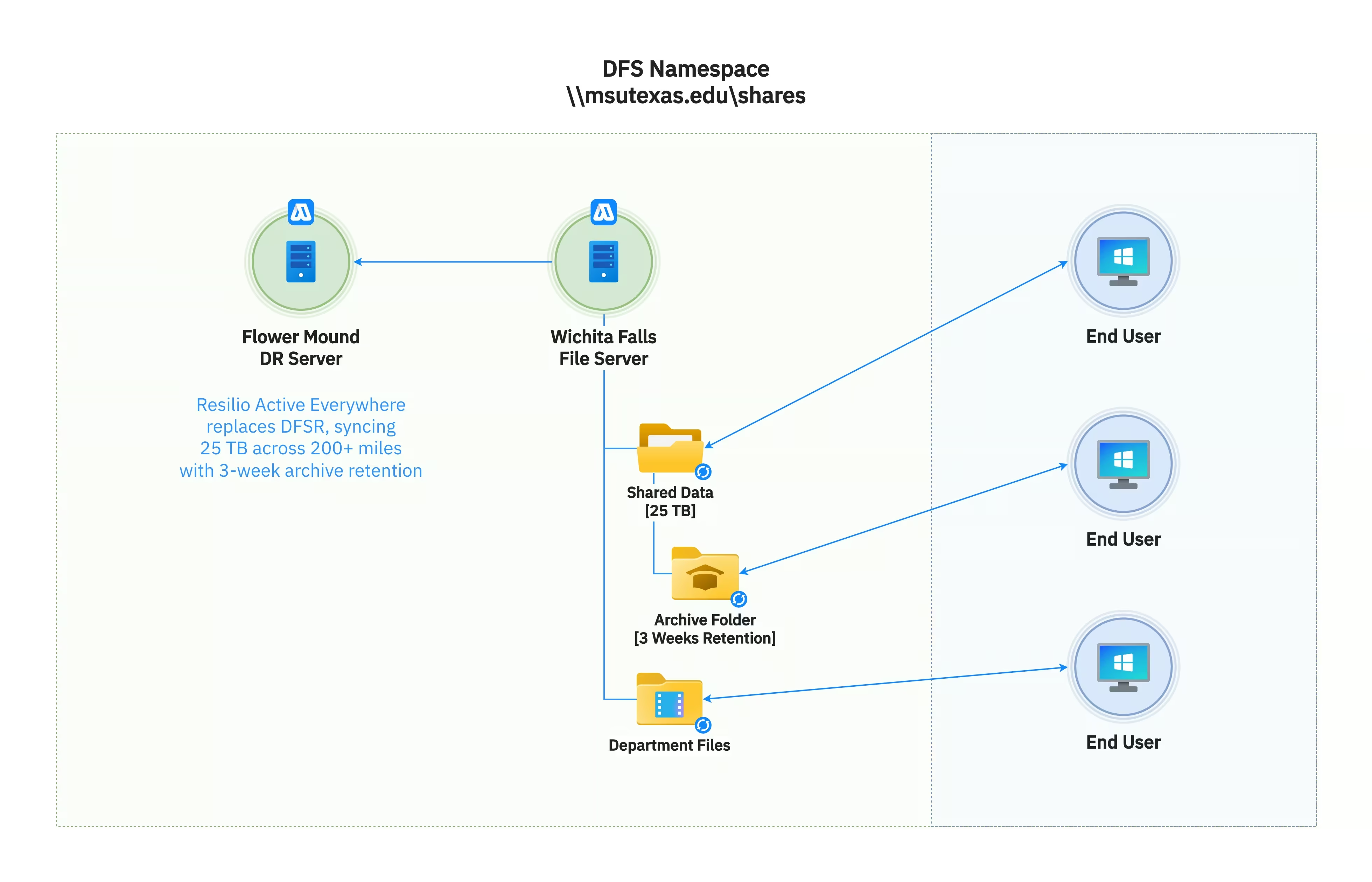
Saturate the link you have—even high-latency, lossy WANs.
DR replication to off-site locations often runs over the worst networks you own: long-distance WAN links, leased lines, and constrained connections to remote sites. Standard file-copy and TCP-based tools slow to a crawl over high-latency, lossy links, putting your initial DR seed and ongoing sync behind schedule. Our WAN-optimized transfer fully utilizes available bandwidth and sends only changed file blocks, keeping replication fast and predictable across any distance.
Full use of available bandwidth, with per-job throttling when you need it
Optimized for high-latency, long-distance, and lossy links
Transfers only changed blocks, not whole files
Replicate and sync 100s of millions of files of any size and type
Keep critical data continuously replicating and complete your initial DR seed, while keeping ongoing replication current—even over constrained or unreliable connections.

Built for the Way DR Actually Works

One-way replication, active-passive failover, and hot-site standby—plus advanced topologies when you need them.
Most DR is one-directional: production replicates to a recovery site that stands ready to take over. Active Everywhere is built for that core pattern first, then scales to more complex topologies as your architecture requires.
One-way replication from primary to DR site, with a read-only target until failover
Active-passive failover and failback between sites or regions
On-premises to cloud DR and cross-region replication for geographic resilience
Hot-site architectures kept continuously in sync for immediate failover
DR for remote and edge sites over constrained networks
Need more than one-to-one? Active Everywhere also supports bidirectional sync and active-active high availability for environments that keep multiple sites active simultaneously. Whatever your IT disaster recovery plan requires, minimize data loss and standardize and scale DR across any environment—without rearchitecting.


Move Faster

Calculate Your Time Savings

See how quickly Resilio Active Everywhere completes your initial DR seed and ongoing replication over your actual network—and how much time you save versus legacy file-transfer and replication tools.

Your Business Environment

See how much time you get back with peer-to-peer-based file transfer running on Reslio Active Everywhere. Adjust the sliders or enter values to approximate your scenario.

Your Use Case:
Endpoints
Your Network
ms
%


FREQUENTLY ASKED QUESTIONS

Resilio for Disaster Recovery

How does Resilio achieve a near real-time RPO?
Why does file-based replication give a better RPO than block-based replication?
How does Resilio support business continuity?
What makes Resilio different from traditional disaster recovery tools?
Is Resilio priced based on how much data I replicate?
Can Resilio handle disaster recovery without relying on the cloud?
Can Resilio support hybrid and multi-cloud disaster recovery?
Does Resilio support hot site disaster recovery?
How does Resilio handle large datasets and high-change workloads?
How does Resilio perform in high-latency or geographically distributed environments?
Can Resilio support active-passive and active-active configurations?
Still have questions?