
Egnyte vs. Resilio: Choosing the Right Platform for Distributed Data and Collaboration

A practical comparison of Resilio Active Everywhere and Egnyte to help organizations understand how each platform supports file synchronization, collaboration, document management, and distributed operations at scale.

Organizations evaluating Egnyte vs Resilio are often trying to solve the same core problem: how to securely access, synchronize, and collaborate on files across distributed teams and locations. While Egnyte and Resilio Active Everywhere address this challenge, they were designed for fundamentally different operational models.

Egnyte is primarily a cloud-centric document management and content collaboration platform, optimized for document workflows, compliance, and hybrid office environments where users and data are anchored to a central cloud service.

Resilio Active Everywhere is a high-performance, distributed file management and synchronization platform built for organizations that manage huge volumes of files, operate across many locations, or depend on file-based workflows that must run at local speed. Rather than routing data through a centralized cloud, Resilio synchronizes files directly between systems, making it a compelling Egnyte alternative for performance-critical and data-intensive environments.

This guide compares Egnyte and Resilio across architecture, scalability, workflows, and real-world use cases to help you determine which platform best fits your environment.

Skip to a section:

Architectural Differences

Egnyte: Centralized, Cloud-Managed Synchronization

Egnyte uses a cloud-managed synchronization model. File changes, permissions, and metadata are processed through Egnyte’s cloud control plane, which coordinates synchronization across users, endpoints, and gateways.

This model works well for:

  • Cloud-based document collaboration
  • Centralized access control and auditing
  • Compliance and governance-driven workflows
  • Environments with no on-prem server infrastructure

However, because synchronization is mediated through the cloud, performance and scalability are influenced by:

  • Internet bandwidth and latency
  • Cloud polling and round-trip delays
  • Dataset size and file count
  • Dependence on continuous connectivity

As file counts grow into the millions, or datasets scale into tens or hundreds of terabytes, cloud-mediated architectures can introduce bottlenecks for replication speed, application performance, and operational reliability.

Resilio Active Everywhere: Distributed, Peer-to-Peer Synchronization

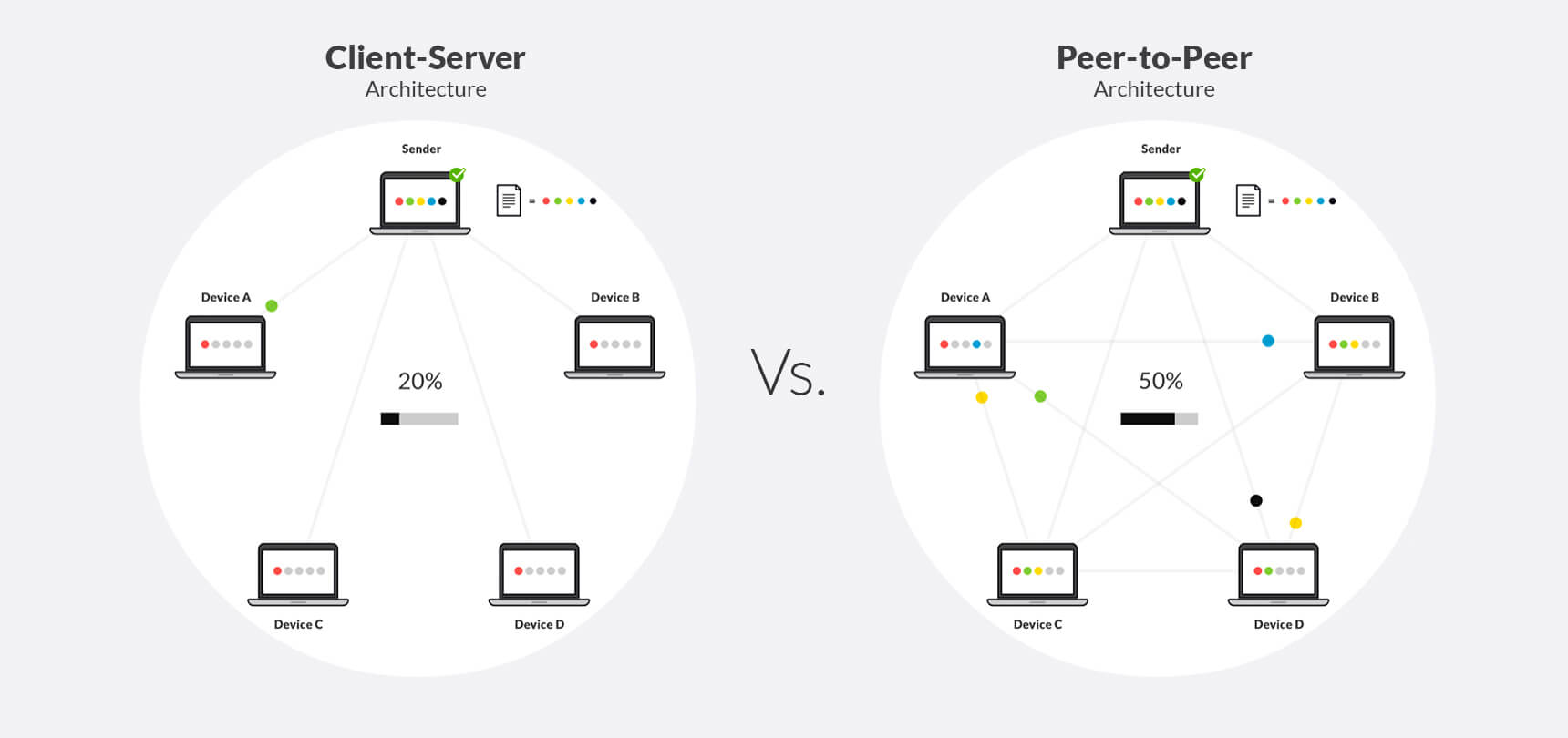
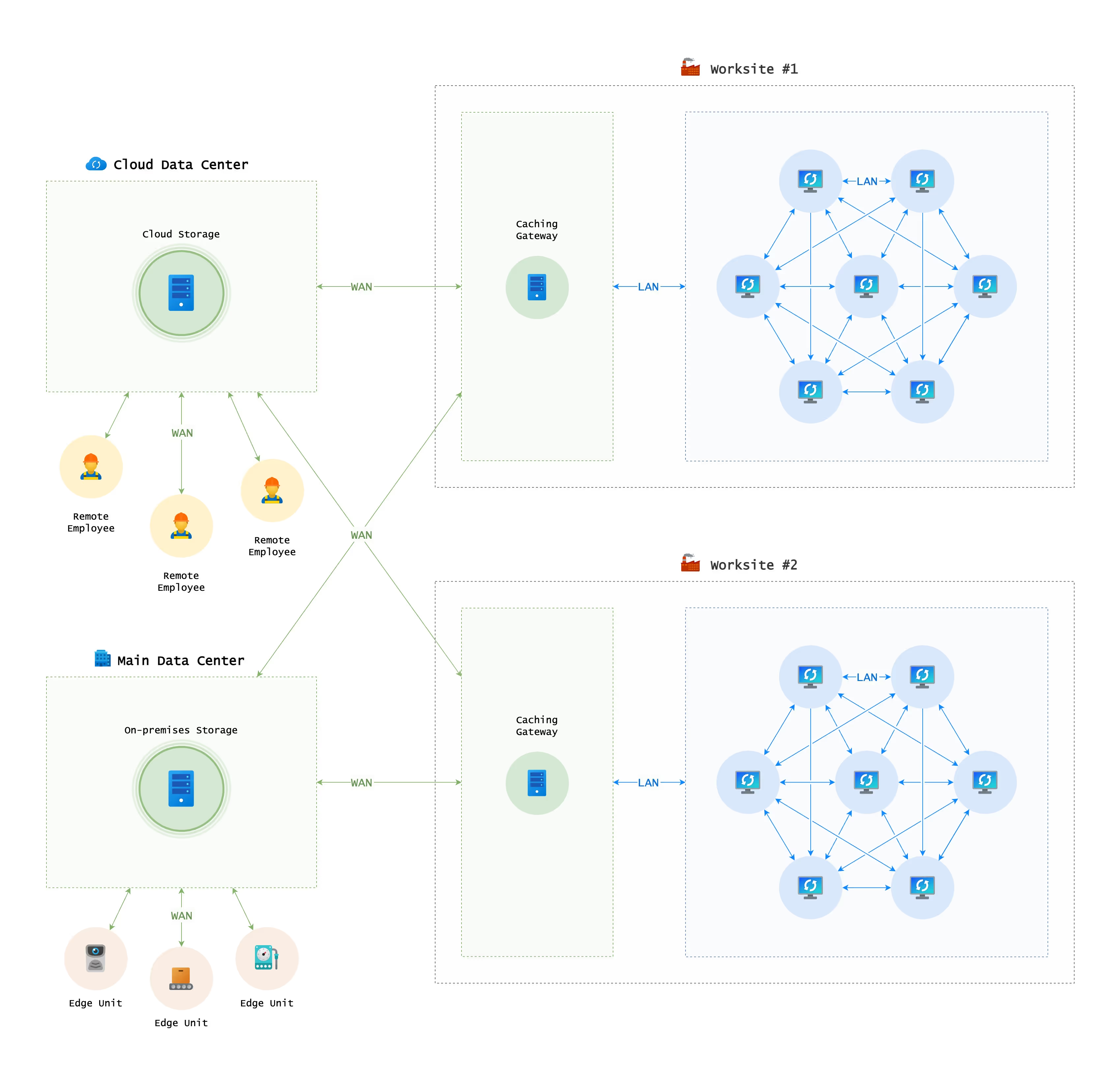
Resilio Active Everywhere uses a fully distributed, peer-to-peer architecture. Systems synchronize files directly with one another, without relying on a cloud relay for the data path. Centralized management is available, but file transfers themselves remain decentralized.

This architecture enables:

  • Event-driven, near real-time, multi-directional synchronization between sites
  • Parallel, block-level data transfer between many peers using built-in WAN optimization
  • Consistent performance as environments scale
  • Full operation on-premises and at the edge
  • Resilience in low-bandwidth or unreliable networks

Because there is no central bottleneck, Resilio scales horizontally and is commonly used for environments with large datasets, high file churn, and many locations.

What Each Platform Provides

What Egnyte Provides

  • Cloud-based file storage, file sharing, and collaboration tools
  • Content management, data governance, compliance, and auditing
  • Granular permission management with role-based access controls
  • Cloud-managed file locking to prevent version conflicts
  • Hybrid access via gateways
  • Smart Cache for branch office acceleration
  • Integration with Microsoft 365 and Google Workspace
  • Secure external file sharing with detailed access controls and activity tracking

Egnyte is well-suited for organizations whose primary needs focus on document-centric collaboration and centralized cloud management.

What Resilio Active Everywhere Provides

P2P vs Client-Server architecture GIF
  • High-performance peer-to-peer synchronization
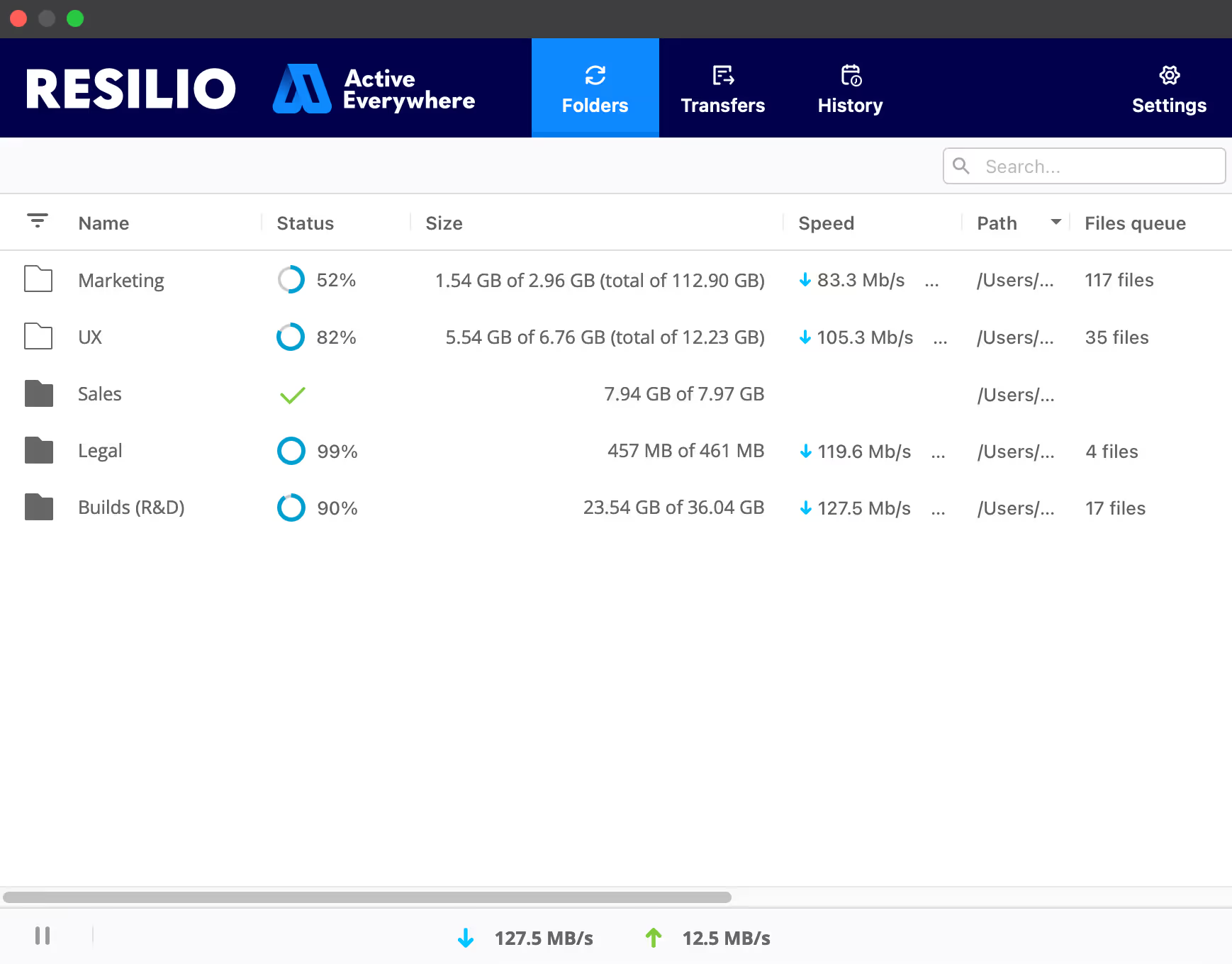
  • Centralized management, monitoring, and policy control
  • Real-time, multi-directional replication
  • Distributed file locking that works offline
  • Minimal reliance on centralized infrastructure, reducing bottlenecks and single points of failure
  • A global file system with intelligent caching
  • Support for very large datasets and file counts
  • Native operation within file-based workflows
  • VPN-less access to files across locations
  • Reliable operation over unreliable, high-latency, or intermittent networks
  • Support for servers, desktops, NAS, cloud storage, containers, and edge devices
  • Parallel block transfer, WAN optimization, and compression
  • Flexible topologies, including mesh and hub-and-spoke
  • Automation through REST APIs and infrastructure integrations
  • End-to-end encryption for secure data transfer between peers

Resilio is purpose-built for organizations that depend on file system performance, not just file sharing.

Feature Comparison: Resilio Active Everywhere vs Egnyte

CategoryResilio Active EverywhereEgnyteWhat This Means
ArchitectureDistributed peer-to-peer replicationCentralized cloud-managed syncResilio avoids cloud bottlenecks
Primary Use CaseDistributed operations, large-scale sync, edge dataCloud collaboration and governanceDifferent operational models
File Count ScalabilityMillions of files per datasetOptimized for document-scale librariesCritical for data-intensive workflows
Dataset SizeTens to hundreds of terabytesLimited by cloud throughput and designResilio handles massive datasets
Sync BehaviorReal-time, event-driven, block-levelCloud-mediated, polling-basedResilio delivers faster propagation
File-Based WorkflowsNative file system access at LAN speedAbstracted through cloud servicesImportant for applications and tools
Offline OperationFull read/write with auto-reconciliationLimited without cloud accessResilio supports edge environments
File LockingDistributed, fast, works offlineCloud-based lockingResilio reduces latency and disruption
Storage FlexibilityBring your own storage, any platformPrimarily Egnyte-managed cloudResilio avoids cloud lock-in
Network ResilienceNo single point of failureDependent on cloud availabilityResilio is more fault-tolerant
Pricing ModelPer-site or per-agentPer-user plus storage tiersResilio offers predictable scaling

File-Based Workflows and Large-Scale Data

A key distinction in the Egnyte vs Resilio comparison is how each platform supports file-based workflows.

Egnyte excels at content collaboration, but applications interact with files through a cloud-managed layer. This works well for documents, but can introduce friction for workflows that depend on local file system performance.

Resilio operates directly at the file system level. Applications read and write files locally, at LAN speed, while Resilio synchronizes changes in the background. There are no proprietary file formats, no content abstraction layers, and no requirement to migrate data into a managed cloud.

This makes Resilio well-suited for:

  • Creative services and marketing agencies
  • Media production for film, video, and television post-production workflows
  • Engineering and CAD environments
  • Software build and CI/CD pipelines
  • Scientific research and analytics
  • Manufacturing and operational data systems
  • Distributed IT and edge deployments

Performance and Scalability

Egnyte Performance

Egnyte performance is closely tied to cloud connectivity. As datasets grow or environments become more distributed, organizations may encounter:

  • Slower sync for large files
  • Delays due to cloud polling
  • Increased dependency on bandwidth quality
  • Scaling challenges with very large file counts

Resilio Active Everywhere Performance

With Resilio:

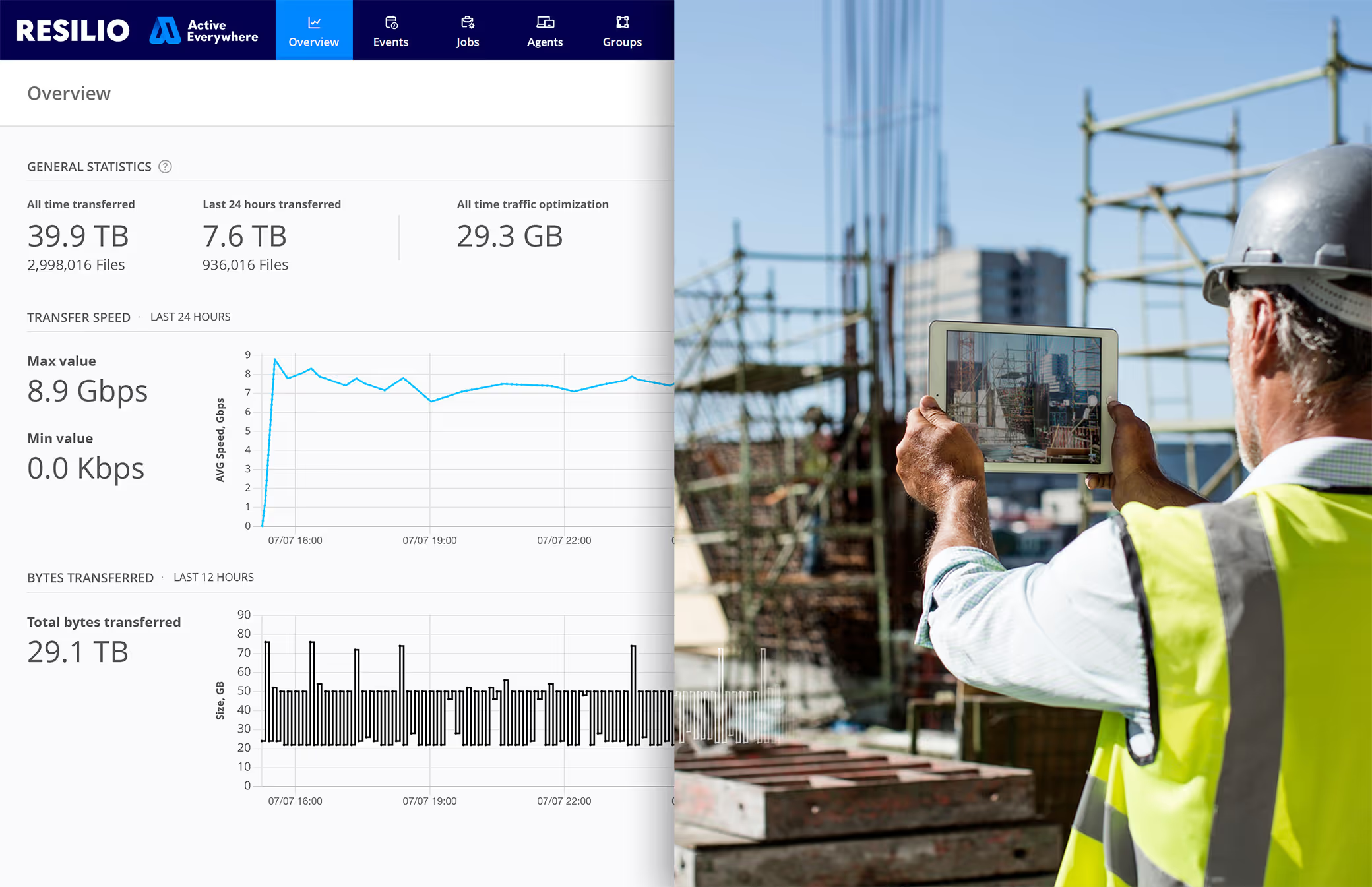
  • Files are broken into blocks and transferred in parallel, enabling high-speed data transfer across distributed locations
  • Multiple peers can serve data simultaneously
  • Per-node bandwidth limits and scheduling policies prevent any single site from being overwhelmed.
  • Only changed data blocks are synchronized

In production environments, Resilio has been deployed for:

  • 100TB+ datasets across multiple regions
  • Millions of files within a single namespace
  • Global environments requiring near real-time propagation
  • Edge locations with limited or intermittent connectivity

Offline & Remote-Edge Operation

Egnyte

Egnyte provides limited offline access to files, but actual synchronization requires cloud connectivity. Remote or intermittently connected locations (ships, field operations, retail sites, etc.) may experience limited functionality until connections are restored.

Resilio Active Everywhere

Resilio continues operating fully even when sites are offline:

  • Files can be accessed, edited, and created locally
  • All changes reconcile automatically when connectivity returns
  • Operations continue smoothly in low-bandwidth, high-latency, or unstable networks

This makes Resilio well-suited for edge environments such as film production sets, maritime vessels, public safety vehicles, broadcast trucks, retail locations, and remote sites.

Case Study: Synergy Marine Group

As one of the world’s largest and most trusted ship management companies, Synergy Marine Group needed a better way to deploy software, updates, and business-critical files across a global fleet of 700 vessels—without relying on unreliable satellite connections, USB drives, or manual processes. With Resilio Active Everywhere, Synergy transformed its ship-to-shore IT operations, achieving massive improvements in speed, scalability, and operational resilience.

Key Results & Benefits:

  • Cut deployment time from one vessel per day to over 600 vessels in just 2–3 days
  • Automated over 2,000 deployments and synced 32TB+ of data without manual effort
  • Replaced USB-based updates with real-time ship-to-shore sync over satellite links
  • Reliable transfers that resume automatically—no babysitting or failed syncs
  • Boosted stakeholder confidence with faster, more secure IT delivery
  • Lowered costs by reducing manual work and using existing infrastructure

File Locking, Global File System & Caching

Egnyte

Egnyte uses cloud-based file locking and offers hybrid access through Smart Cache, which improves performance for branch offices.

Resilio Active Everywhere

Resilio includes:

  • Distributed, high-speed file locking with instant propagation on Windows local storage, version control, and offline support
  • Global file system that presents a unified namespace across sites, with policy-driven caching and on-demand hydration so only active data is fully materialized at each location
  • Intelligent, policy-based caching that reduces storage costs and keeps files close to users

These capabilities are designed for real-time collaboration across distributed teams working on large or frequently updated files.

Storage & Infrastructure Flexibility

Egnyte

Egnyte emphasizes its managed cloud storage environment. Hybrid and on-premises options exist but remain tied to Egnyte’s control plane.

Resilio Active Everywhere

Resilio supports virtually any storage environment:

  • Existing servers (Windows/Linux)
  • NAS devices
  • Cloud storage (any provider)
  • Object storage
  • Edge or IoT devices

No proprietary file formats are required, and organizations can leverage their existing investments without cloud lock-in.

Why Resilio Is a Strong Alternative to Egnyte

Organizations most often evaluate Resilio as an alternative to Egnyte when their needs extend beyond cloud-based document management and into large-scale, performance-critical file operations.

Resilio is designed to handle massive file counts and datasets without relying on a centralized cloud data path. Files synchronize directly between systems, which helps maintain consistent performance as environments scale across locations.

Unlike cloud-centric collaboration platforms, Resilio operates directly at the file system level. Applications read and write files locally at LAN speed, while changes synchronize automatically in the background. This makes Resilio well-suited for file-based workflows such as engineering, media production, software builds, and operational systems.

Resilio also continues operating fully in distributed or intermittently connected environments. Files remain accessible and editable offline, and changes are reconciled automatically when connectivity returns.

Finally, Resilio integrates with existing storage and infrastructure and uses a predictable, site-based pricing model, making it easier to scale data, locations, and workflows without cloud lock-in or usage-based cost growth.

Summary: Which Platform Is Right for You?

Choose Egnyte if your organization prioritizes:

  • Cloud-first online collaboration
  • Document workflows
  • Centralized governance and compliance

Choose Resilio Active Everywhere if your organization needs:

  • High-speed, real-time file synchronization
  • Support for extensive datasets and file volumes
  • Native user-friendly file-based workflows
  • Reliable operation across distributed or edge environments
  • Flexible deployment without cloud lock-in
  • Predictable cost scaling as data grows

Ready to Move Faster?

Resilio Active Everywhere helps enterprises move faster by eliminating the bottlenecks that slow down distributed data operations. If your organization needs to accelerate workflows, scale without constraints, or keep edge operations running at full speed, schedule a call with our team to evaluate your architecture and use case.

Contact Us

Related Posts